-
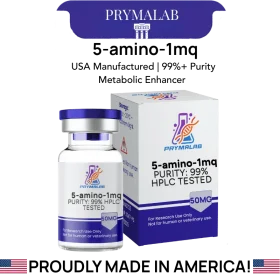
5-amino-1MQ 50MG
$79.99 or subscribe for $67.99/mo This product has multiple variants. The options may be chosen on the product page -

5-Amino-1MQ 50mg (60 Capsules)
$179.99 or subscribe for $149.99/mo This product has multiple variants. The options may be chosen on the product page -
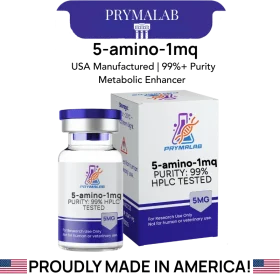
5-amino-1MQ 5MG
$19.99 or subscribe for $16.99/mo This product has multiple variants. The options may be chosen on the product page -
AC-262 (Accadrine) 10mg Capsules
$69.99 or subscribe for $58.99/mo This product has multiple variants. The options may be chosen on the product page -
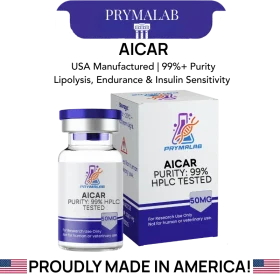
AICAR 50MG
$39.99 or subscribe for $32.99/mo This product has multiple variants. The options may be chosen on the product page -
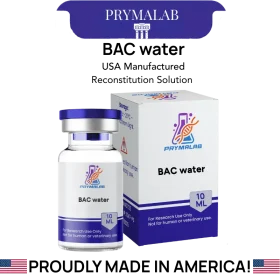
BAC Water (Bacteriostatic Water) 10ML
$7.99 This product has multiple variants. The options may be chosen on the product page -
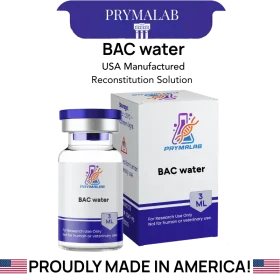
BAC Water (Bacteriostatic Water) 3ML
$3.99 This product has multiple variants. The options may be chosen on the product page -
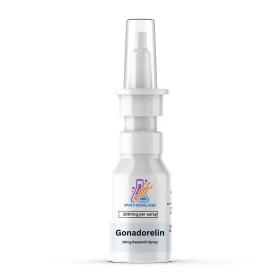
Gonadorelin 10mg Nasal Spray
$119.99 or subscribe for $101.99/mo This product has multiple variants. The options may be chosen on the product page -
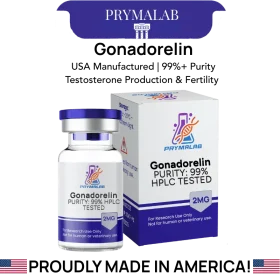
Gonadorelin 2mg
$14.99 or subscribe for $12.75/mo This product has multiple variants. The options may be chosen on the product page -
GW-501516 (Cardarine) (10mg/capsule) 60 Capsules
$79.99 or subscribe for $67.99/mo This product has multiple variants. The options may be chosen on the product page -
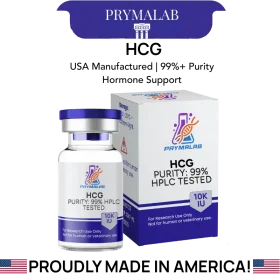
HCG 10000iu
$45.99 or subscribe for $38.99/mo This product has multiple variants. The options may be chosen on the product page -
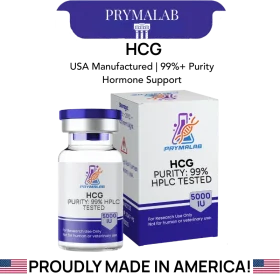
HCG 5000iu
$28.99 or subscribe for $23.99/mo This product has multiple variants. The options may be chosen on the product page -
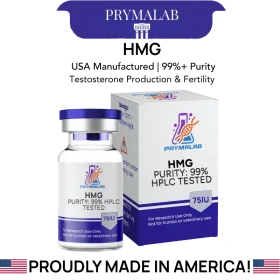
HMG 75IU
$36.99 or subscribe for $30.99/mo This product has multiple variants. The options may be chosen on the product page -
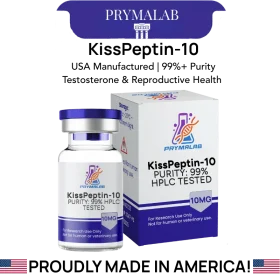
KissPeptin-10 (10mg)
$59.99 or subscribe for $49.99/mo This product has multiple variants. The options may be chosen on the product page -
Kisspeptin-10 10mg Nasal Spray
$89.99 or subscribe for $75.99/mo This product has multiple variants. The options may be chosen on the product page -
KissPeptin-10 5mg
$39.99 or subscribe for $32.99/mo This product has multiple variants. The options may be chosen on the product page -
L-Carnitine 500mg
$59.99 or subscribe for $49.99/mo This product has multiple variants. The options may be chosen on the product page -
MK-677 (Ibutamoren) (10mg/capsule) 60 Capsules
$64.99 or subscribe for $54.99/mo This product has multiple variants. The options may be chosen on the product page -
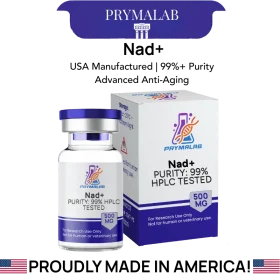
NAD+ 1000mg
$59.99 or subscribe for $49.99/mo This product has multiple variants. The options may be chosen on the product page -
NAD+ 500mg
$39.99 or subscribe for $33.99/mo This product has multiple variants. The options may be chosen on the product page -
NAD+ Nasal Spray
$119.99 or subscribe for $99.99/mo This product has multiple variants. The options may be chosen on the product page -
Noopept (Omberacetam) 30mg Capsules
$21.99 or subscribe for $18.50/mo This product has multiple variants. The options may be chosen on the product page -
Sale!
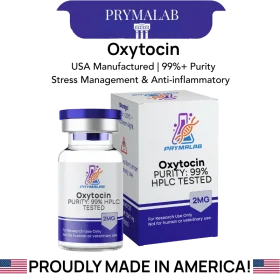
Oxytocin 2mg
$40.00 or subscribe for $34.00/mo This product has multiple variants. The options may be chosen on the product page -
Oxytocin 2mg Nasal Spray
$89.99 or subscribe for $74.99/mo This product has multiple variants. The options may be chosen on the product page -
Sale!
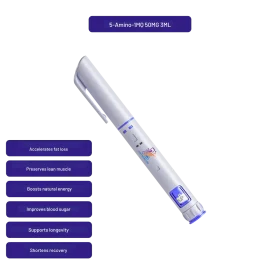
Preloaded Autoinjector | 5-Amino-1MQ | 3ml Pen | 50mg/ml
Original price was: $139.99.$119.99Current price is: $119.99. -
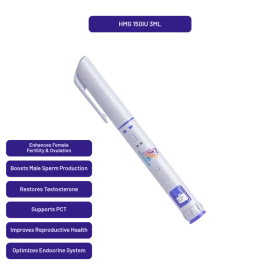
Preloaded Autoinjector | hMG (Menotropins) | 3ml Pen | 150IU
$89.99 or subscribe for $75.99/mo This product has multiple variants. The options may be chosen on the product page -
Sale!
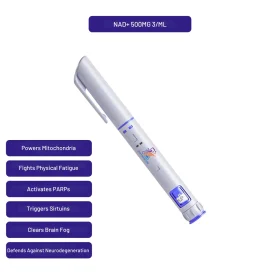
Preloaded Autoinjector | NAD+ (injectable) | 3ml Pen | 500mg/ml
Original price was: $179.99.$149.99Current price is: $149.99. -
Sale!
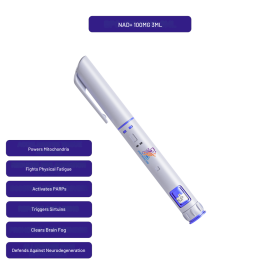
Preloaded Autoinjector | NAD+ | 3ml Pen | 100mg/ml
Original price was: $79.99.$59.99Current price is: $59.99. -
Sale!
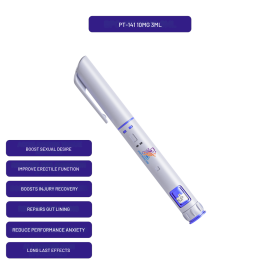
Preloaded Autoinjector | PT-141 | 3ml Pen | 10mg/ml
Original price was: $94.99.$79.99Current price is: $79.99. -
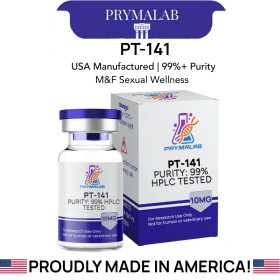
PT-141 10mg
$41.99 or subscribe for $34.99/mo This product has multiple variants. The options may be chosen on the product page





What the category is · what the labelling means · what to verify
Research chemicals for sale online occupy a category defined by intended use rather than by chemistry. The compounds have nothing structurally in common. What connects them is a labelling status: supplied for laboratory work, not for human or veterinary use, and not validated for any diagnostic procedure. This page sets out what that status means legally, what a certificate of analysis has to report, and what published analysis has found when material from this market was tested.
Specification Table
| Property | Value |
|---|---|
| What defines the category | Intended use and labelling status, not chemical class |
| Standard labelling phrase | Research use only, abbreviated RUO |
| What RUO excludes | Human use, veterinary use, and any diagnostic or clinical procedure |
| What RUO does not imply | Any purity threshold, any manufacturing standard, any regulatory review |
| Compound classes stocked here | Selective androgen receptor modulators, nootropic compounds, metabolic and endurance agents, oestrogen control compounds, miscellaneous reference compounds |
| Standard purity method | Reverse-phase HPLC, area percent at a stated wavelength |
| Standard identity methods | Mass spectrometry, and nuclear magnetic resonance for small molecules |
| Why NMR matters for small molecules | It resolves structural isomers that share a molecular formula and therefore share a mass |
| Documented mislabelling rate | A 2017 JAMA analysis of 44 products marketed as selective androgen receptor modulators found the labelled compound present as stated in a minority of them |
| Most informative single document | The chromatogram, rather than the purity figure derived from it |
| Page type | Category hub, not a product page |
| Schema page type | CollectionPage |
| Cornerstone content | Yes |
| Meta robots | index, follow |
| Regulatory status | No compound in this category holds an approved human or veterinary formulation |
What Is a Research Chemical?
The term describes a status rather than a kind of molecule, and that is the first thing to be clear about.
A compound sold this way is supplied for laboratory work. It is not for human or veterinary use, it is not validated for diagnostic procedures, and it has not been reviewed by any regulator for any application.
The compounds grouped under it share no chemistry. A receptor modulator, a racetam and a metabolic agent have nothing structurally in common and appear together only because the same labelling applies to all three.
The phrase carries no quality meaning whatsoever. There is no minimum purity, no manufacturing standard, and no inspection regime attached to it.
That is worth stating plainly because listings offering research chemicals for sale frequently present the label as though it conveyed a standard, and it conveys the opposite: an absence of one.
What supplies the missing information is a certificate of analysis for the specific lot, produced by an instrument, on a stated date.
Without one, a buyer has a name on a label and no evidence connecting it to the contents.
That gap is not theoretical. The section below sets out what happened when somebody measured it.
One consequence of that structure is worth drawing out. Because the category is defined by labelling rather than chemistry, a single supplier catalogue can hold compounds whose handling requirements have nothing in common.
A receptor modulator stable on a shelf for years sits alongside a compound that photodegrades within days of exposure, and the shared label says nothing about which is which.
Reading the individual product page rather than the category page is therefore not optional here in the way it sometimes is elsewhere.
What Did Published Testing Find?
The most useful thing to know about this market is that its labelling accuracy has been measured. The measurement is not reassuring.
A 2017 analysis published in JAMA purchased 44 products sold online as selective androgen receptor modulators and analysed their contents.
The labelled compound was present as stated in a minority of the samples. Some contained a different active compound than the one named. Some contained substances not listed anywhere on the label. Some contained no active compound at all.
Where the labelled compound was present, the measured amount frequently differed from the stated amount, in both directions.
That study covered one compound class and it is the best available evidence on the question, which is itself informative about how thin the evidence base is.
The conclusion a buyer should draw is narrow and firm. A product name on a listing is a claim, not a finding, and the only thing that converts it into a finding is analytical data tied to the lot in hand.
This is the entire argument for demanding a certificate rather than accepting a description, and it applies with more force here than anywhere else on this site.
A supplier who cannot produce lot-specific data is asking to be trusted on precisely the point where the published record says trust has been misplaced.
It is worth being precise about what the study does and does not establish. It sampled one compound class at one point in time from one set of vendors, so the specific proportions do not transfer automatically to any other class or any other year.
What does transfer is the structural point. A market in which no independent party verifies labelling will contain mislabelled material, and the rate will be discovered only when somebody measures it.
No comparable analysis has been published for the nootropic or metabolic compounds in this catalogue, which means the honest position on those is that the rate is unknown rather than that it is low.
Why Does NMR Matter for Small Molecules?
Verification for the small molecules in this category needs a method that peptide verification does not, and its absence is a real gap.
Mass spectrometry establishes molecular formula. For a peptide that is usually sufficient alongside the synthesis route, because the sequence constrains what else the formula could describe.
For a small molecule it is much weaker, because structural isomers share a formula and therefore share a mass.
Two compounds with atoms arranged differently around the same skeleton are indistinguishable by mass alone. They can differ completely in what they bind.
Nuclear magnetic resonance resolves that. It reports on the chemical environment of individual nuclei, so it distinguishes arrangements that mass spectrometry cannot.
A certificate for a small molecule reporting HPLC purity and a mass has established that something of the right formula is present at the right retention time. It has not established that the arrangement is correct.
Suppliers of research chemicals for sale rarely include NMR data, and asking for it is one of the more informative questions available in this category.
The answer separates operations that characterise material from operations that repackage it, and the distinction does not show up anywhere on a listing page.
What Distinguishes These Compounds From the Peptide Range?
The two halves of this catalogue differ in ways that matter for handling as much as for chemistry.
Peptides are polymers of amino acids, typically synthesised on solid phase, purified by reverse-phase chromatography and supplied lyophilized. Their principal failure routes are hydrolysis, oxidation, deamidation and aggregation.
The small molecules here are made by conventional organic synthesis and supplied as powders or in capsules. Their failure routes are different: oxidation and photodegradation feature, and hydrolysis usually does not.
Storage requirements diverge accordingly. Much of the peptide range needs cold storage and protection from moisture, while many of these compounds are stable at room temperature in a sealed container.
Solubility diverges too. Peptides are generally water soluble. A large share of the small molecules here are not, requiring an organic co-solvent, which introduces a variable into any assay that the peptide range does not.
Analytical verification diverges, as set out above, with nuclear magnetic resonance carrying weight here that it does not carry for a sequence of known composition.
The counterion and net peptide content questions that dominate peptide certificates do not apply to these compounds at all, and a certificate borrowing that language for a small molecule was written from a template.
That last point is a useful tell when reading supplier documentation across a mixed catalogue.
Shelf life differs as well, and in the direction most buyers do not expect. A sealed small molecule powder frequently outlasts a lyophilized peptide at the same temperature, because the failure routes that dominate peptide degradation need water and these compounds are less sensitive to it.
That advantage disappears the moment either is put into solution, where both are governed by the solvent, the pH and the temperature rather than by what they were before.
How Should Research Chemicals for Sale Online Be Verified?
Seven questions cover most of what can be established before material arrives.
Which lot will ship, and can the certificate for that specific lot be produced now rather than after purchase.
What method produced the purity figure, at what detection wavelength, and can the chromatogram itself be supplied.
Is there mass spectrometry data, and for a small molecule is there nuclear magnetic resonance data alongside it.
Which laboratory performed the analysis, and is it in-house or contracted. Either answer is acceptable and evasion is not.
What is the storage history of the lot, including whether it has been held at ambient temperature at any point.
What solvent system is recommended, and is there measured solubility data or an estimate.
Does the compound have any documented instability, such as photosensitivity, that changes how the container should be handled on arrival.
A supplier answering most of those is unusual. One answering none of them is selling a description, and the published testing record above sets out what descriptions in this market are worth.
What Does the Wider Research Chemical Supply Chain Look Like?
The phrase covers a much broader trade than the compounds on this page, and understanding the wider category explains what the labelling conventions actually mean.
At one end sits the established chemical supplier, selling laboratory chemicals, reagents, solvents, buffers and consumables down to crucibles and stains, to institutional accounts.
Those customers are largely in drug discovery and academic research, where a compound is a step in a programme rather than an end in itself.
Those firms also supply reference standards, stable isotope labelled compounds for mass spectrometry, and analytical services alongside the material itself.
Specialty chemicals is the adjacent trade: smaller volumes, higher purity, made to order. Custom synthesis is the service form of it, where a compound is produced to a customer specification rather than held in stock.
Peptide synthesis is one branch of that, and a peptide service producing sequences to order operates on the same model as any custom synthesis house.
Building blocks are the input side. Protected amino acids, resins and linkers are what solid-phase peptide synthesis consumes, and they are sold as chemicals rather than as products.
An active pharmaceutical ingredient is a different regulatory object again. APIs are manufactured under pharmaceutical quality systems for incorporation into approved medicines, and an API grade is a claim about that system rather than about purity alone.
Nothing in a research chemical catalogue is an API unless it says so and can show the documentation, and the two categories are routinely conflated in marketing.
Grade language is where most of the confusion sits. Technical grade means fit for industrial use with impurities unspecified. Lab grade sits above it. Reference standard grade is characterised to a documented specification.
Research grade, as used across this market, has no agreed definition at all, which is why the testing record described above matters more than the label does.
What Distinguishes the Compound Classes Here?
A catalogue of this kind spans several chemical families, and their handling and verification requirements differ substantially.
Research peptides and recombinant proteins are the largest group by volume in this market. Both are made biologically or semi-synthetically, both are verified by mass, and both degrade in ways small molecules do not.
Small organic compounds are the other major group. Organic chemistry produces them by synthesis rather than assembly, and NMR rather than mass spectrometry is what confirms their structure, for the reason set out above.
Within that group, phenols, esters and sulfides each carry their own stability considerations, with phenols oxidising readily and esters hydrolysing in the presence of water.
Fatty acids and their derivatives sit in the same chemical space and are usually handled as bulk material rather than as research quantities.
Natural products are compounds isolated from biological sources rather than synthesised, and their characterisation problem is that a natural extract contains more than the named compound.
Metabolites are a specific subcategory, being the products a compound becomes in the body, and they matter for analytical chemistry because a metabolite standard is what makes a bioanalytical method quantitative.
Inorganic compounds and simple materials, sucrose and salts among them, occupy the low end where identity is rarely in question and purity is the only variable.
Environmental analytical work covers a further set again, with PCBs, organotin compounds and similar contaminants supplied as certified standards for testing rather than for research on the compounds themselves.
Cosmetic ingredients and food additives overlap this space at the edges, and both carry their own regulatory frameworks that a research chemical does not.
How Should a Research Chemical Vendor Be Assessed?
The practical question for a buyer is which supplier to trust, and a few things separate the careful from the rest.
A COA specific to the lot, rather than a generic document reused across batches, is the first requirement and the one most often failed.
That certificate should name the analytical method, state the conditions, and attach the actual trace rather than summarising it as a percentage.
Chromatography establishes purity and mass spectrometry or NMR establishes identity, and a certificate reporting only one has answered half the question.
Spectrophotometry has its place for compounds with a usable chromophore, and it is a concentration method rather than an identity one.
Where a supplier offers analytical services or in-house testing, ask whether the testing on your lot was actually run or inherited from an upstream supplier.
Biochemistry and biochemical reagents bought for assay work carry the additional question of whether the material was tested for activity rather than only for structure.
Green chemistry credentials, sustainability claims and similar positioning say nothing about whether the compound in the vial is what the label says.
Research chemicals online is a large market with a wide quality distribution, and the testing record described earlier on this page is the reason to treat vendor description as a hypothesis.
Everything supplied here is for laboratory research only, holds no approval for human or veterinary use in any jurisdiction, and is not for administration to humans or animals.
Published Literature
Selected references on labelling accuracy in this market and on analytical verification.
- Van Wagoner RM, Eichner A, Bhasin S, Deuster PA, Eichner D. Chemical composition and labeling of substances marketed as selective androgen receptor modulators and sold via the internet. JAMA. 2017;318(20):2004-2010. https://doi.org/10.1001/jama.2017.17069
- Thevis M, Schanzer W. Detection of SARMs in doping control analysis. Mol Cell Endocrinol. 2018;464:34-45. https://doi.org/10.1016/j.mce.2017.01.040
- D'Hondt M, Bracke N, Taevernier L, et al. Related impurities in peptide medicines. J Pharm Biomed Anal. 2014;101:2-30. https://doi.org/10.1016/j.jpba.2014.06.012
- Holzgrabe U, Deubner R, Schollmayer C, Waibel B. Quantitative NMR spectroscopy applied to drug analysis. J Pharm Biomed Anal. 2005;38(5):806-812. https://doi.org/10.1016/j.jpba.2005.01.050
Frequently Asked Questions
What are research chemicals?
Compounds supplied under research-use-only terms for laboratory work. The category is defined by intended use and labelling rather than by chemistry, so the compounds within it share no structural relationship.
Does research use only mean the compound is pure?
No. The phrase excludes human use, veterinary use and diagnostic procedures. It attaches no purity threshold, no manufacturing standard and no regulatory review. Purity is a measured, lot-specific value reported on a certificate.
How accurate is labelling in this market?
A 2017 JAMA analysis purchased 44 products sold online as selective androgen receptor modulators and found the labelled compound present as stated in a minority. Some contained a different compound, some contained unlisted substances and some contained no active compound.
Why does that study matter when buying?
It establishes that a product name on a listing is a claim rather than a finding. Analytical data tied to the specific lot is what converts one into the other, and nothing else does.
Why is NMR needed for small molecules?
Structural isomers share a molecular formula and therefore share a mass, so mass spectrometry cannot distinguish them. Nuclear magnetic resonance reports on the chemical environment of individual nuclei and resolves arrangements that mass alone cannot.
Is a mass spectrum sufficient for a peptide?
It is stronger there, because a known sequence constrains what else the formula could describe. It still confirms composition rather than residue order, so sequence confirmation remains a separate determination.
How do storage requirements differ from the peptide range?
Many compounds here are stable at room temperature in a sealed container, while much of the peptide range needs cold storage and protection from moisture. Photodegradation features here more often and hydrolysis features less.
Do these compounds dissolve in water?
A large share do not, requiring an organic co-solvent. That introduces a variable into an assay that the mostly water-soluble peptide range does not, so measured solubility data is worth requesting.
Does net peptide content apply to these compounds?
No. Net peptide content and counterion identity are peptide certificate fields. A certificate applying that language to a small molecule was produced from a template rather than from analysis of the material.
What compound classes are stocked here?
Selective androgen receptor modulators, nootropic compounds, metabolic and endurance agents, oestrogen control compounds, and a miscellaneous group of reference compounds that do not fit the other headings.
What is the most informative document a supplier can provide?
The chromatogram rather than the purity figure derived from it. A trace shows where impurities elute, whether they resolve from the main peak, and whether integration was reasonable. Co-eluting material inflates a purity number without falsification.
Does any compound in this category hold an approval?
No. No compound listed here holds an approved human or veterinary formulation in any jurisdiction, and all material is supplied for laboratory research only.
Compliance Statement
Research chemicals are sold exclusively for laboratory research use. They are not a drug, food, or cosmetic product, and they are not a dietary product of any kind. They are not approved by the FDA or any comparable authority for human or veterinary use, the category label denotes intended use rather than any quality standard, published analysis of this market has documented substantial rates of mislabelling, and no compound listed here holds an approved human or veterinary formulation in any jurisdiction. These products are not intended to diagnose, treat, cure, or prevent any disease. They must not be given to humans or animals. Purchase is restricted to qualified researchers and institutions operating within applicable laws. All handling is the responsibility of the purchasing laboratory.
Browse the Research Chemicals range by focus
The range is split into 7 groups, each with its own page: Fat Loss, Metabolic & Endurance Agents (10), Longevity & Anti-Aging Compounds (5), Miscellaneous Research Compounds (2), Nootropics & Cognitive Compounds (1), Other Research Chemicals (7), PCT, Hormones & Estrogen Control (5) and Sexual Health & Hormone Compounds (16). Open a group to see every product in it with its quantity, concentration and format. Everything is supplied for laboratory research only and ships with a batch certificate of analysis.